 Lingerieinfo
LingerieInfo.com
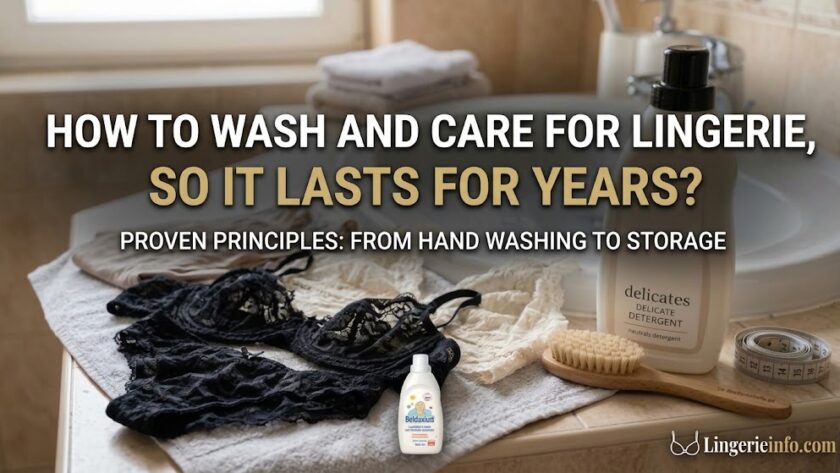
Fine lingerie is an investment—and like any investment, it requires proper care to yield returns. From my professional experience at the brafitting table, one thing stands out: women rarely complain about the inherent quality of the lingerie they buy; instead, they struggle with how quickly it loses its original fit and shape. In the vast majority of cases, the product itself is not at fault—the culprit is home maintenance.
This guide outlines the core principles that genuinely extend the lifespan of bras, panties, and fine intimate wear, backed by clear reasoning on why these methods work.
Why Lingerie „Dies” Faster Than Other Garments
Elastane—the elastic fiber responsible for stretch and shape retention—is exceptionally sensitive to high temperatures, mechanical friction, and harsh detergents. Unlike a standard cotton t-shirt, a bra loses its structural integrity rapidly if subjected to regular machine washing cycles. Understanding this mechanism is key: every rule in this guide stems from the need to protect elastic fibers.
Hand Washing Lingerie – The Professional Brafitter’s Gold Standard
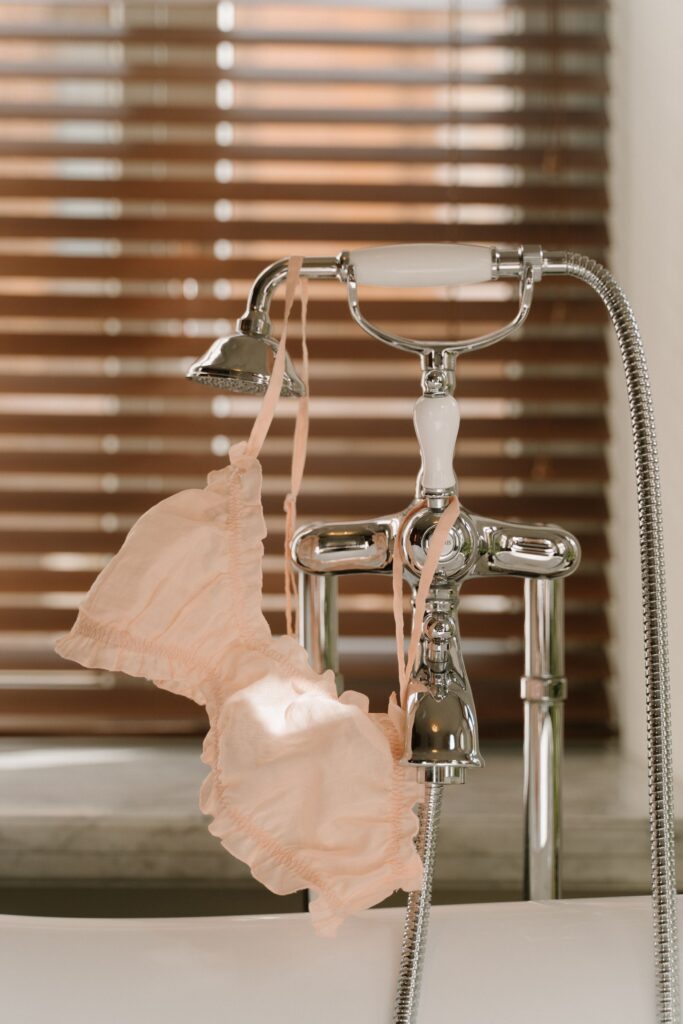
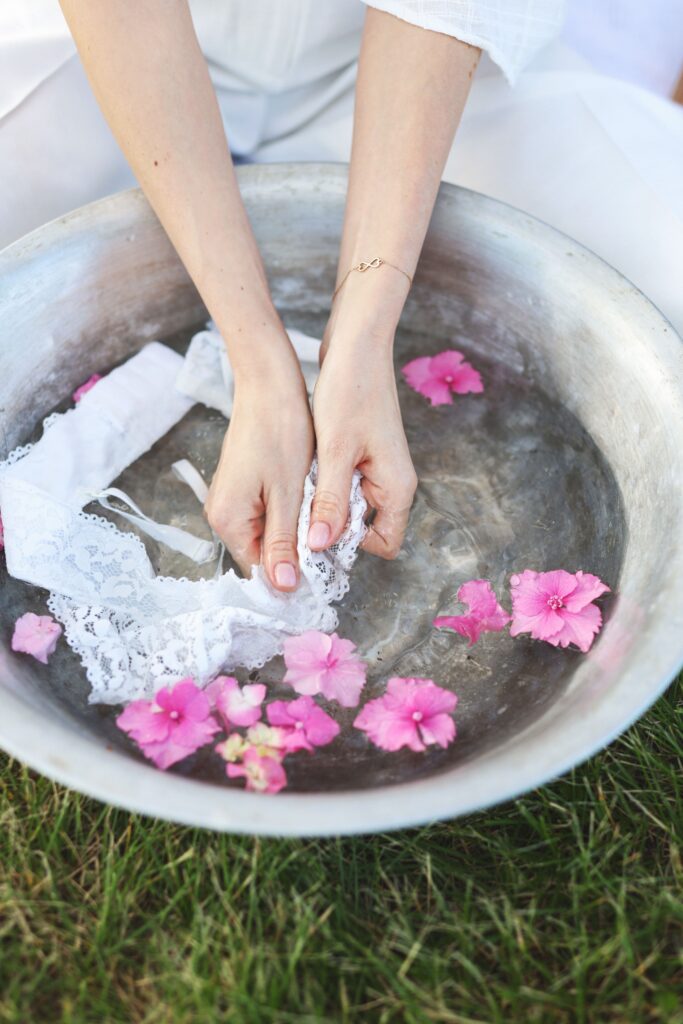
Hand washing in lukewarm water (maximum 30°C / 86°F) remains the safest method for preserving fine intimate apparel. Here is the correct step-by-step approach:
- Prepare the bath: Fill a basin with lukewarm water and add a small amount of mild detergent.
- Soak gently: Submerge the garments and gently swirl them in the water—avoid rubbing, wringing, or twisting the fabric.
- Rest & rinse: Allow the pieces to soak for 5–10 minutes for deeper cleansing, then rinse thoroughly in clean, lukewarm water.
- Remove moisture: Gently press out excess water with your hands (never wring). Roll the garment in a clean towel to absorb remaining moisture.
Machine Washing: If You Must
We understand that hand washing every single piece of lingerie can be unrealistic with a busy schedule. If you opt for a washing machine, adhere strictly to these rules to minimize damage:
- Fasten the hooks: Always hook bra clasps prior to washing—open hooks snag delicate lace and bend out of shape.
- Use a mesh wash bag: A protective garment bag is the single most effective tool for extending lingerie life in a washing machine.
- Select a delicate cycle: Wash at 30°C (86°F) maximum, with no spin cycle or a minimal setting (400–600 RPM).
- Skip the tumble dryer: Tumble drying introduces extreme heat—the fastest way to permanently ruin elastane fibers.
Choosing the Right Detergent: Do Baby Detergents Work?
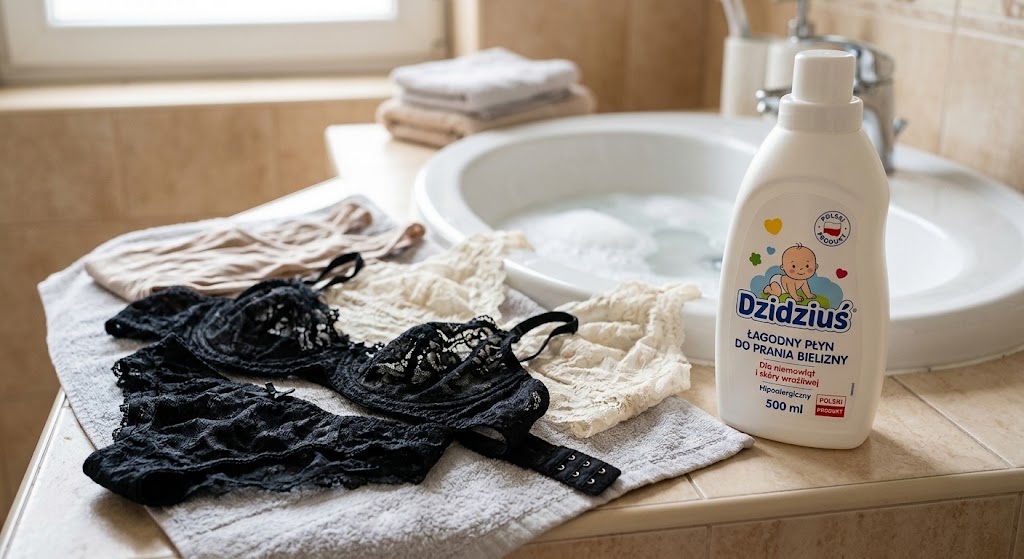
A common question in care routine discussions: Do gentle baby detergents actually work well for fine lingerie?
The short answer is yes—for specific structural reasons rather than marketing claims. Baby laundry products are engineered without aggressive optical brighteners, harsh enzymes, or heavy fragrances to protect delicate infant skin. These exact characteristics make them far gentler on delicate lace and elastane fibers than standard, multipurpose washing powders.
When selecting any detergent for fine lingerie, look for:
- No optical brighteners (which can alter or fade colored lace).
- Low or zero proteolytic enzymes.
- Labels indicating „for delicate fabrics” or „hypoallergenic.”
- Avoiding fabric softeners directly on elastane—softeners coat and degrade elastic fibers over time.
Drying: Patience Pays Off
Lingerie should dry exclusively in a flat position on a clean towel or a mesh drying rack, away from direct heat sources (radiators, direct sunlight), and never in a tumble dryer. Hanging a bra by its shoulder straps on a clothesline stretches the elastics and warps the construction. Instead, lay it flat with cups facing upward to maintain their natural contour.
Storage: Small Habits, Big Results
Storage techniques impact the longevity of your lingerie nearly as much as washing routines:
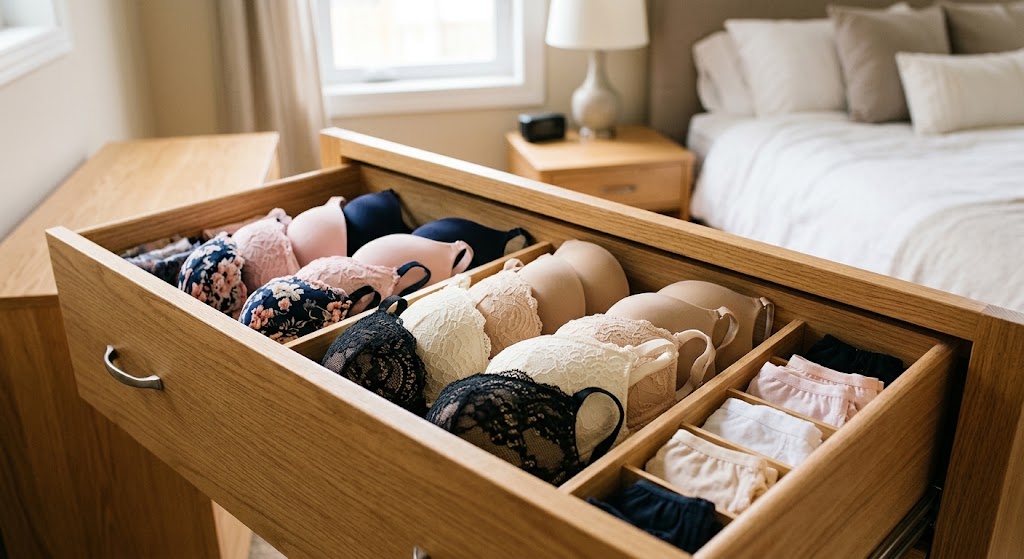
- Do not nest cups (stacking cup-into-cup): Invert-folding or nesting cups is the most common mistake, permanently flattening and distorting molded structures over time. Store bras side-by-side with cups facing up.
- Rotate between 2–3 core pieces: Elastane fibers require roughly 24 hours to „rest” and regain their original tension after being worn.
- Keep storage dry and ventilated: Store lingerie in a cool, breathable space away from humidity.
- Avoid overcrowding drawers: Compression deforms underwires and padded cups.
How Long Should Quality Lingerie Last?
With proper care and consistent rotation, a high-quality bra retains its structural integrity for approximately 8 to 12 months of regular wear—though meticulous care can extend this lifespan even further.
The primary indicators that it is time for a replacement include loss of underband elasticity (the band begins to ride up or curl) and visible distortion in the cups that no longer recovers after wear.
Summary
The fundamental rule of lingerie care is straightforward: less heat, less friction, more patience. Hand washing or using a protective laundry bag, selecting a mild detergent, drying flat, and storing without nesting cups form the four pillars that significantly extend the life of fine intimate wear.
FAQ – How to Wash Lingerie and Extend Its Lifespan
Can I machine-wash a bra every day? It is not recommended. Even with a mesh wash bag and low temperatures, daily machine washing accelerates elasticity loss. Rotating multiple bras and hand washing every few days yields far better longevity.
Are baby laundry detergents safe for colored lace? Yes, provided the formula contains no optical brighteners, which can gradually shift colored fabric tones. Always verify the ingredient list on the packaging.
How often should I purchase new lingerie? Under regular wear and proper maintenance, plan to replace core bras every 8–12 months based on visible wear indicators (stretched bands, deformed cups) rather than a rigid calendar date.
Does fabric softener damage lingerie? Yes. Regular exposure to fabric softeners coats elastane, weakening its elastic stretch over time. It is best avoided for fine intimate apparel.
Should I iron lingerie? No. Never iron items containing lace or elastane—the direct heat destroys elastic fibers. To remove creases, hang the garment in the bathroom during a hot shower; gentle steam will naturally smooth out wrinkles without risk.
Editorial Disclosure & Independence Statement: This guide is for educational and informational purposes only. The content is based solely on professional brafitting expertise and textile care standards. This article was not produced in partnership with any detergent manufacturers or brands, nor does it contain sponsored content or paid product placements.