 Lingerieinfo
Over my years working in lingerie fitting and curation, I have heard the exact same sentence hundreds of times from clients: „But this lace is just so beautiful.” And I get it – lace has an undeniable, instant allure. The critical issue, however,is that how it looks on the hanger and how it performs after three washes are often two completely different stories.
If you have ever purchased lingerie that lost its shape after just a month, started to fray at the edges, or scratched you mercilessly at the seams – you were almost certainly dealing with a lace quality issue, not a design flaw. Here is what I actually look for when I take a new product in my hands before I ever dream of recommending it to a client.
1. Edge Finishing and the 'Fray’ Test
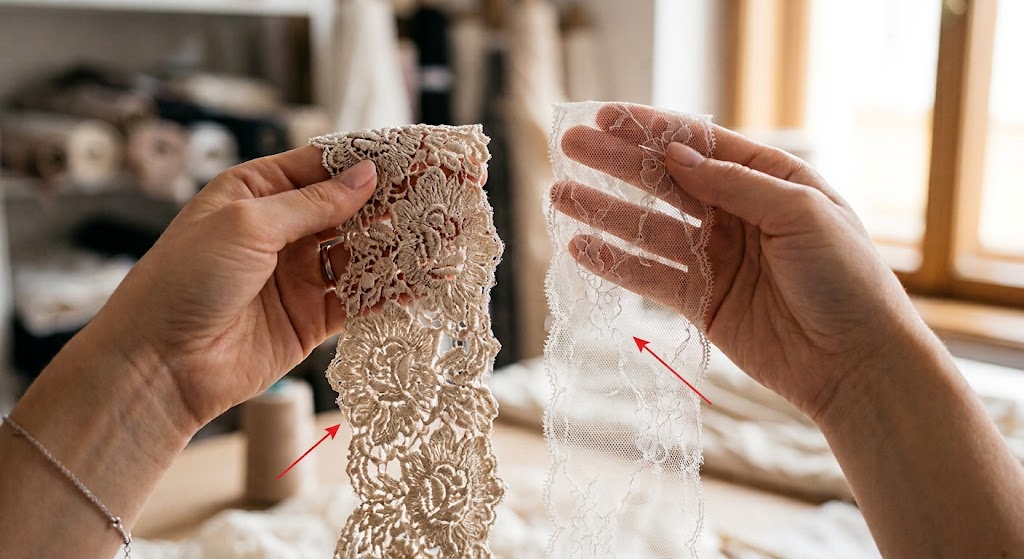
This is the very first thing I check, even before I truly analyze the pattern. Good lace features an edge that is woven during the textile creation process – slightly wavy, clean, and never featuring a raw, harsh cut. Cheap lace, on the other hand, often has an edge that is simply laser-cut or hand-snipped, and only slightly stiffened. This raw edge will invariably begin to fray or curl after the very first wash. My tip: gently drag your fingernail along the edge. If you immediately feel single, loose threads, that is a clear warning sign.
2. Weave Density and the Light Test
I always hold the lace up to the light. This is the fastest, most effective test you can do, even inside a busy shop. High-density, premium lace (like authentic Chantilly or Leavers lace, woven on traditional krosna/looms) displays a distinct,structural pattern against a transparent yet even, high-quality background. Poor lace, which is often machine-produced (the so-called Raschel or raszlowa knit), allows light through unevenly. Upon closer inspection, you will see the pattern is flat and „printed” onto the mesh, rather than being an integral, woven part of it.
3. The Composition Label Test
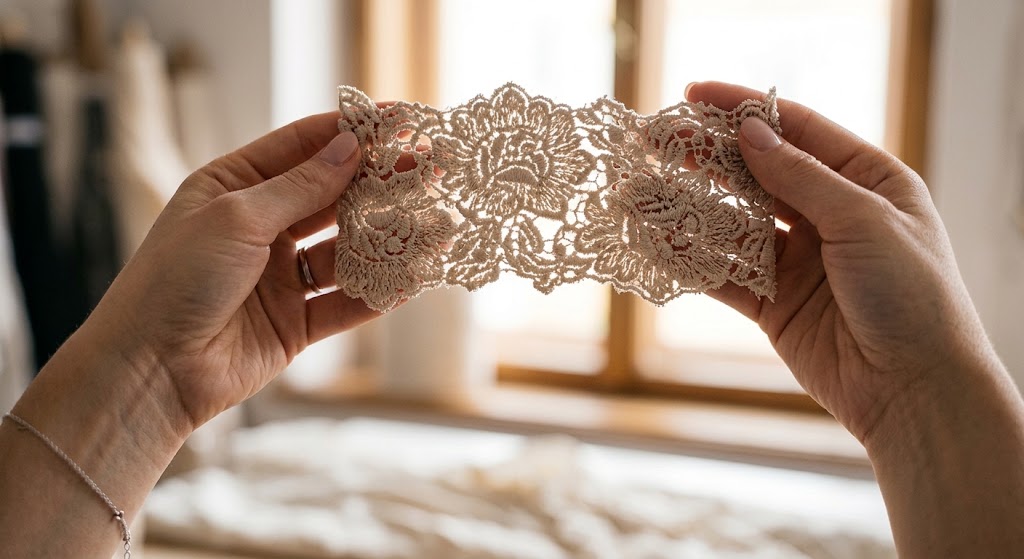
I check the composition label without fail before I even begin my visual evaluation. A classic, high-quality European lace is typically a blend of cotton, viscose, and polyamide (often in proportions around 30-50-20%, respectively). This specific blend provides the perfect trifecta of softness, natural luster, and durability. While a „100% Polyester” label does not automatically guarantee terrible quality, in the world of lingerie lace, it almost always correlates with a cheaper, less elastic fabric that will „plasticize” and lose its softness and luster very quickly after a few washes.
4. Elasticity and Instant Shape Retention
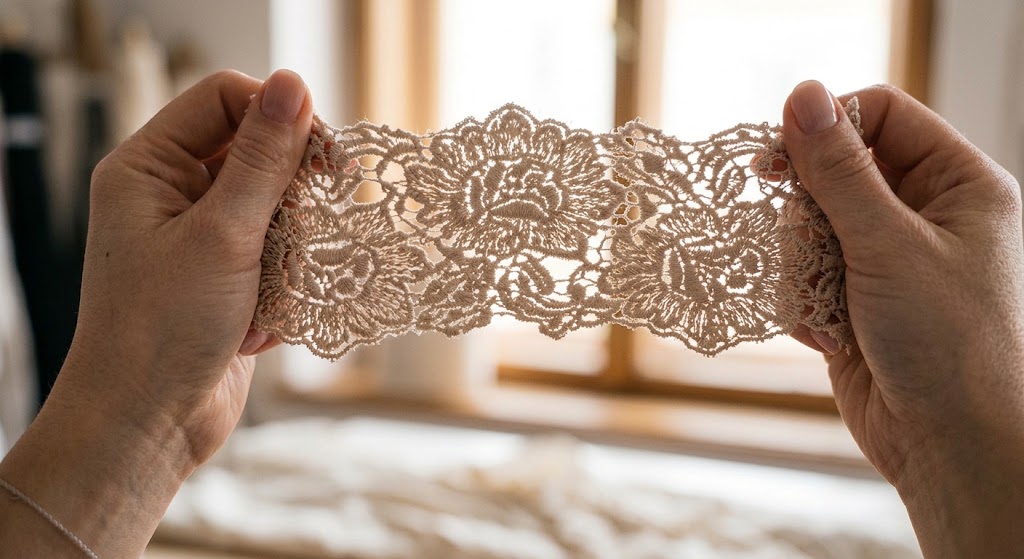
This is a test I always perform personally: I stretch a small section of the lace in my hands and release it. High-quality lace snaps back to its original shape almost instantly, without any visible signs of thread „fatigue.” A lower-quality fabric, once stretched, will remain slightly distended; the mesh will appear looser, and the pattern will lose its crispness. If you are doing this test on a finished product in a store, pay special attention to the lace on the bra cups and straps, as these are the areas most prone to daily stretch and stress.
5. Precision in Finished Details
Good lace rarely stands alone; it is usually paired with tulle, lining, or a second fabric layer. The true quality of a product’s craftsmanship is revealed in these connection points. Here is my checklist for impeccable detail:
- Are the seams connecting the lace to the other fabric even, precise, and smooth on the inside, without any stray threads?
- Does the lace motif continue uninterrupted through the side seams? In truly premium products, the pattern is matched and aligned to transition flawlessly over the connections.
- Are any applications (like ribbons or appliques) sewn on, not glued? Glue eventually yellows and peels, especially after a wash in slightly higher temperatures.
6. The Initial Scent and Stiffness Test
It might sound unusual, but it works: new, high-quality lace does not carry an intense, chemical odor and is not excessively stiffened with apretura/sizing. A strong, „plastic-like” or chemical scent often signals that a manufacturer has used a significant amount of finishing agents to disguise the lace’s underlying structural weaknesses. After the very first wash, this artificial stiffening will disappear, and often, so will the initial „WOW effect” that sold the product.
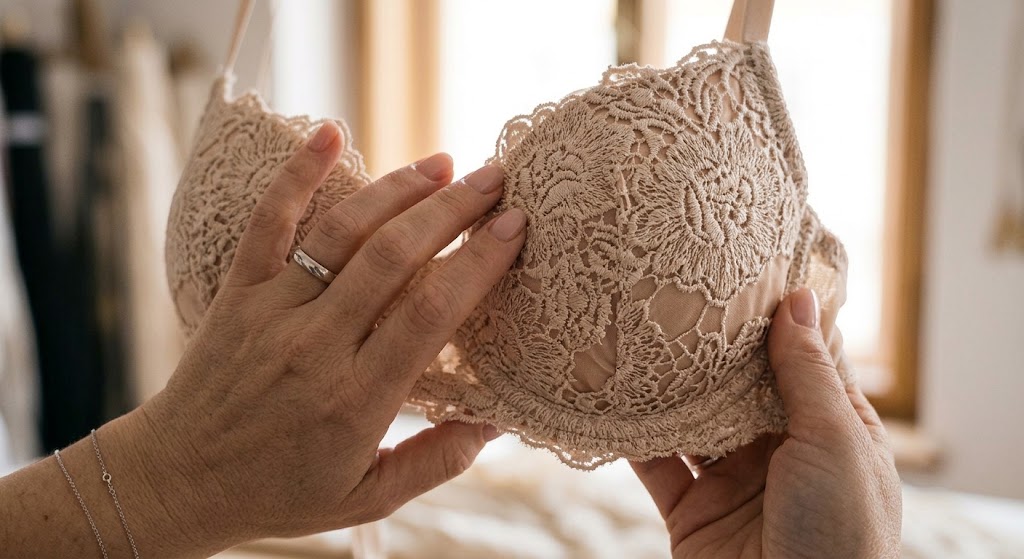
A Brafitter’s Quick Lingerie Lace Cheat Sheet
| I Check | High-Quality Lace | Low-Quality Lace |
|---|---|---|
| Edge | Woven, softly scalloped | Cut, raw, will fray |
| Light Test | Distinct, structural, even weave | Flat „print” on uneven mesh |
| Composition | Cotton/Viscose/Polyamide blend | Usually 100% Polyester |
| After Stretch | Snaps back to shape instantly | Distorts, pattern loses crispness |
| Detail Work | Smooth seams, matched patterns | Cut patterns, stray threads |
| Initial Scent | Neutral | Intense, chemical, stiffened |
Final Advice from the Brafitter’s Fitting Room
A high-quality lace does not always mean the most expensive price tag; I have personally seen budget-friendly lingerie featuring surprisingly durable, high-quality lace, and I have analyzed expensive models where the material disappointed from the very first touch. These simple tests – light, stretch, composition, and odor – are ones you can perform in any store before you ever step foot in a fitting room. Taking five minutes for this check will truly save you months of disappointment after a few washes.
[AUTHOR: The author has years of experience in lingerie fitting and professional brafitting. These guidelines are based on professional practice and the industry-standard standards for lace quality used by premium bieliźnia/lingerie brands.]
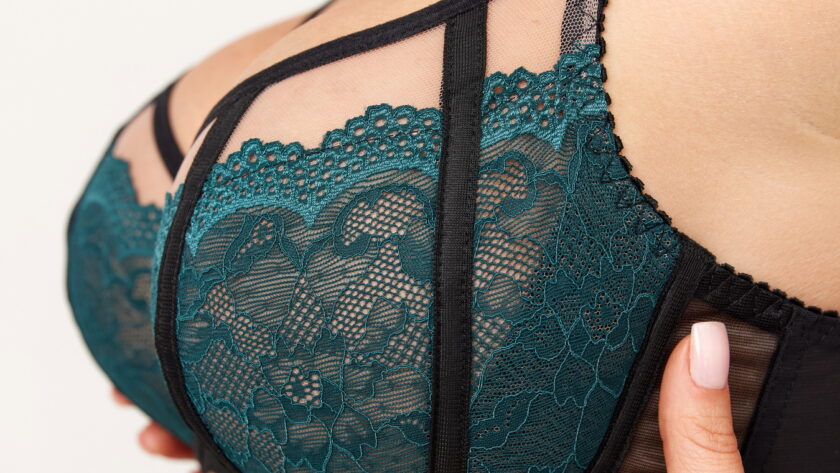
Photo:This photo is from the AZAL collection.