




All voices matter
All voices matter

A Cotton Gusset Won’t Save Synthetic Underwear: The Truth Labels Don’t Tell You
Share your love
A cotton gusset is a standard feature in almost every pair of lace, “seamless,” or “ice silk” panties today. It gives us the reassuring feeling that we are buying something both attractive and health-conscious. However, gynecologists have serious reservations about this compromise. I checked what international medical clinics and scientific studies actually say on the topic.
For years, I bought underwear the way most of us do: focusing on the cut, the color, and whether the lace would show under a fitted dress. I only checked the care label to make sure there was a “cotton liner inside.” That tiny rectangular patch in the crotch felt like a guarantee of safety.
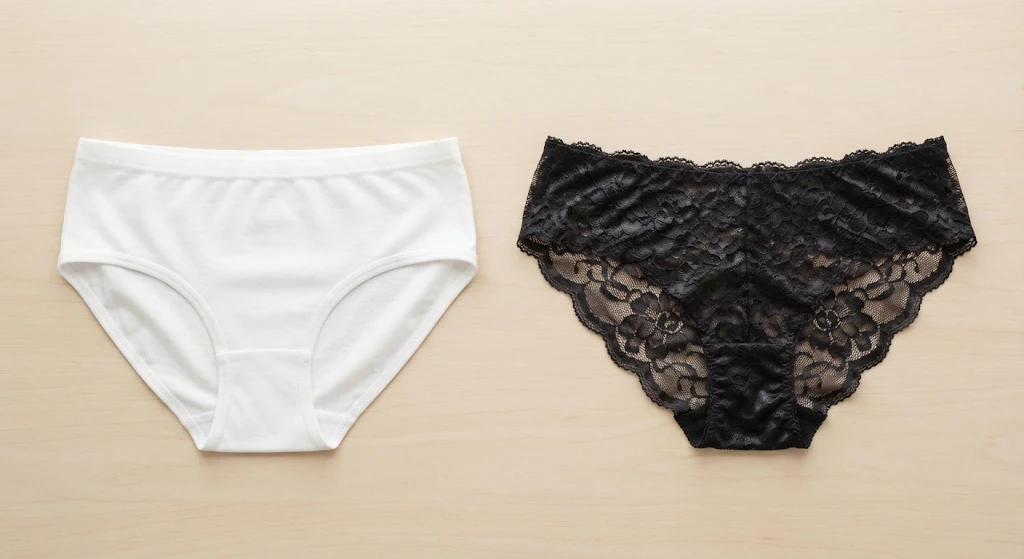
As it turns out, that guarantee is largely an illusion. While a cotton gusset isn’t completely useless, it doesn’t change the fact that the rest of the panty is still polyester, polyamide, or elastane. Below, I explain what product packaging won’t tell you: how much protection a gusset actually offers, when fabric dyes become a problem, and why doctors increasingly recommend going panty-free at night.
A Cotton Gusset in Underwear: What It Actually Does (and Doesn’t Do)
The gusset is a small fabric panel sewn into the crotch. It absorbs sweat and discharge in the most sensitive area of the body. This provides a tangible benefit, but it is not the same as wearing underwear made entirely of cotton.
Dr. Erica Newlin, a gynecologist at the Cleveland Clinic, addresses this directly. In her view, a small cotton panel does not fully shield the skin from synthetic fabrics and fails to breathe like 100% cotton. While synthetic underwear is fine for occasional wear, she advises choosing all-cotton pairs for daily use.
Guidelines from specialized vulvovaginal health clinics take an even firmer stance. The University of Iowa Hospitals & Clinics recommends plain white, 100% cotton underwear and explicitly advises against nylon panties with a cotton gusset. Similar recommendations appear in the vulvar care guidelines issued by the Tripler Army Medical Center in Hawaii.
The “Health Halo” Trap
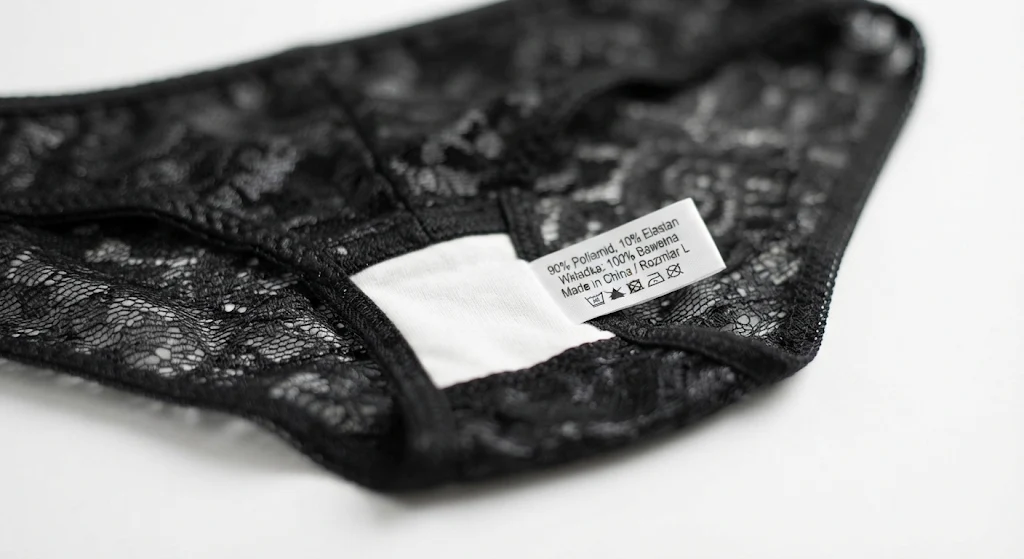
Consumer psychologists refer to this phenomenon as the “health halo effect”: a single positive attribute makes an entire product seem healthier than it really is. A label reading “100% Cotton Gusset” works in precisely this way, masking a overall composition that might read: 90% polyamide, 10% elastane.
In reality, synthetic material still contacts the skin—across the mons pubis, the groin folds, and between the buttocks. In tight-fitting styles, the gusset is often narrow or positioned too far back, leaving parts of the vulva touching synthetic fabric. Heat and moisture become trapped throughout the entire pelvic region, not just in the center.
Is the Gusset Completely Useless?
No, and it is important to be fair. In the 2019 American B-THONG survey, wearing panties with a non-cotton crotch was associated with a higher frequency of vaginal yeast infections. A cotton liner is therefore a valuable baseline when choosing lace or seamless designs. However, it remains a poor substitute for full cotton underwear, especially for women prone to infections or localized skin irritation.
100% Cotton vs. Synthetics: What Science Says About Breathability and Moisture
Cotton outperforms synthetic fabrics for two main reasons: high air permeability and moisture absorption. According to the Cleveland Clinic, it is also significantly less likely to trigger allergic reactions. This matters because trapped heat and excess moisture create an ideal breeding ground for bacteria and Candida yeast species.
The underlying mechanism is straightforward. Polyester and polyamide absorb almost no water, leaving sweat and vaginal secretions trapped against the skin. Furthermore, snug-fitting synthetic cuts restrict airflow. This creates a warm,humid microclimate that can irritate vulvar tissue and trigger recurring infections in susceptible individuals.
Honesty Regarding Scientific Limits
As an independent editorial team, we must highlight an important caveat: high-quality clinical studies dedicated specifically to underwear fabrics are limited. American gynecologist Dr. Jen Gunter points out that observational studies from Spain and Ukraine found no direct link between synthetic underwear and yeast infections in healthy, asymptomatic women. On the other hand, an earlier study in the American Journal of Public Health associated tight-fitting garments with higher rates of Candida colonization.
What does this mean in practice? For a woman with no underlying symptoms, fabric composition is unlikely to cause medical issues. However, for individuals experiencing recurrent yeast infections, sensitive skin, or chronic vulvar conditions such as vulvodynia, cotton underwear is a core medical recommendation—as underscored by the National Institute of Child Health and Human Development (NICHD) and vulvar hygiene frameworks in The Permanente Journal.
What About Thongs?
Here lies a common misconception. The B-THONG study found no evidence that the thong silhouette itself increases the risk of urinary tract infections, yeast infections, or bacterial vaginosis. The authors suggest that physicians advise patients on fabric composition rather than style. The main issue with thongs is not their shape, but the fact that they are predominantly manufactured from synthetic materials.
Textile Dyes: The Hidden Trigger of Skin Irritation
The color of your underwear can also affect skin health, a factor frequently overlooked in consumer guides. When asked whether dyes in colored underwear can cause irritation, Dr. Newlin of the Cleveland Clinic responds affirmatively,recommending plain white cotton underwear for patients with hyper-sensitive skin.
This guidance is widely supported internationally. Patient leaflets issued by NHS vulvar clinics across the UK explicitly advise wearing white or light-colored underwear to avoid dark textile dyes such as black and navy blue. These recommendations are published by NHS trusts including University Hospitals Coventry & Warwickshire and East Kent Hospitals.
Why Do Dyes Cause Allergic Reactions?
Sensitizations are most frequently caused by disperse dyes, which are widely used to color synthetic fibers like polyester.According to DermNet, disperse dyes represent one of the main causes of textile allergic contact dermatitis. Notably, the American Contact Dermatitis Society named Disperse Blue dyes “Allergen of the Year” in 2000. Under heat and friction,these dyes can leach out of synthetic fibers when exposed to sweat.
The statistical prevalence is noteworthy: a comprehensive review in Contact Dermatitis indicates that over 1% of patients undergoing patch testing show sensitivity to common disperse dyes. The problem is frequently misdiagnosed because standard dermatological patch tests often omit specialized textile dye panels.
In daily life, localized itching and redness along the contact lines of dark synthetic underwear can easily be mistaken for an infection. If a physician has ruled out vulvovaginal candidiasis or vaginosis but symptoms persist, switching to un-dyed, white cotton underwear for several weeks serves as a practical diagnostic step.
Going Panty-Free at Night: One Step Beyond “Wear Cotton”
Even high-grade cotton creates a layer that traps thermal energy near the body. For this reason, numerous specialized clinics recommend nighttime “ventilation”—sleeping without underwear or in loose-fitting cotton shorts.
While Dr. Newlin does not advise going panty-free during active daytime routines, nighttime presents a different environment, particularly for women recovering from vulvar irritation or candidiasis. Loose pajama bottoms or boxer-style shorts allow air to circulate freely, promoting skin recovery.
This consensus is reinforced across international institutions:
- NICHD (US Institutes of Health): Recommends 100% cotton during the day and no underwear at night for vulvodynia management.
- Canadian Armed Forces: Includes nighttime panty-free guidance in its official female personal hygiene manual.
- NHS Hospitals (UK): Recommends avoiding underwear during sleep across multiple specialist vulvar care departments (e.g., West Suffolk NHS Trust).
Who benefits most? Women experiencing recurrent candidiasis, chronic pruritus, vulvodynia, or contact dermatitis. For healthy individuals with no history of irritation, going panty-free at night is simply a matter of personal comfort.
(Note: During menstruation, breathable, soft cotton underwear worn with appropriate sanitary products remains recommended.)
Reading Labels Without Marketing Hype: A Material Guide
As a rule of thumb: the composition of the entire garment matters, not just the crotch panel. As the Cleveland Clinic notes, many modern synthetic blends mimic the soft feel of cotton, making physical inspection unreliable. Always read the fabric care tag.
Fabric Composition Breakdown
| What You See on the Label | What It Means in Practice |
|---|---|
| 95% Cotton, 5% Elastane | Best choice for daily wear. Cotton provides breathability; elastane ensures shape retention and comfort. |
| 100% Organic Cotton | Premium cotton grown without synthetic pesticides. Mechanically identical in breathability to standard cotton. |
| Modal, Viscose, Lyocell (e.g., 90% + elastane) | Cellulosic semi-synthetics with high moisture absorption. A comfortable middle ground, though distinct from pure cotton in medical guidelines. |
| Polyamide/Polyester + Elastane (“100% Cotton Gusset”) | Fully synthetic underwear with a minimal cotton panel. Ideal for special occasions, but not recommended for sensitive skin or all-day wear. |
| “Ice Silk” | A commercial marketing term, typically referring to smooth, cool-touch synthetic knits (polyamide/polyester with elastane). Always verify percentage composition. |
| Missing Composition Data | Red flag. Under EU and US regulations, apparel retailers are legally required to list complete fiber contents. |
Buyer’s Checklist
- [ ] Overall Fiber Content: Ensure at least ~90% cotton for everyday underwear.
- [ ] Gusset Coverage: If choosing synthetics, select designs with a wide, extended gusset that fully covers the anatomical vulvar area.
- [ ] Color Selection: Opt for white or un-dyed fabrics if you experience sensitive skin or recurrent irritation.
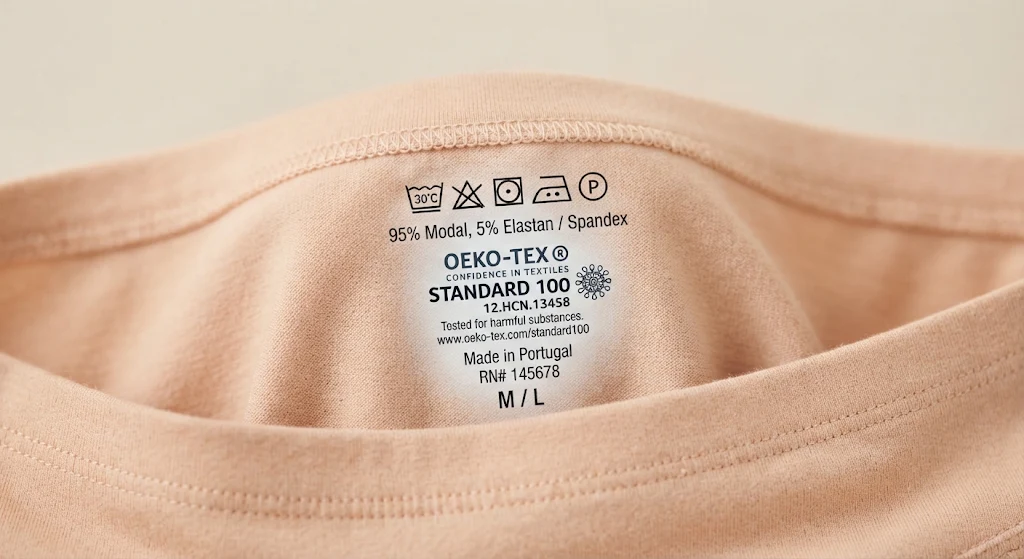
- [ ] OEKO-TEX STANDARD 100 Certification: Look for Product Class II certification, guaranteeing the garment has been tested for hazardous chemicals and restricted azo dyes.
- [ ] Ergonomic Cut: Avoid narrow elastic bands that chafe or dig into the groin folds.
- [ ] Pre-Wash Routine: Always wash new underwear prior to first wear to eliminate residual manufacturing finishes.
- [ ] Laundering Care: Use fragrance-free, hypoallergenic detergents, and change underwear at least once daily.
What About Lace and Decorative Styles?
You do not need to discard your lace collection. Clinical guidelines, including those from the Cleveland Clinic, explicitly allow synthetic and decorative underwear for short-term or occasional wear, while recommending natural fibers as the baseline for everyday routines. A practical rule is to wear breathable cotton during work and daily activities, reserving delicate synthetics for evenings out. Athletic moisture-wicking synthetics are appropriate during workout sessions,provided you change into clean cotton immediately afterward.
Frequently Asked Questions (FAQ)
Is a cotton gusset in synthetic underwear enough?
For occasional wear, yes; for everyday use, no. While the gusset absorbs moisture directly at the crotch, the surrounding synthetic fabric continues to trap heat and humidity around the pelvic region. Gynecologists from the Cleveland Clinic recommend wearing panties made entirely of cotton for daily routines.
What percentage of cotton should good underwear have?
Ideally around 90–95% cotton, combined with a small percentage of elastane (spandex) for fit and elasticity. Underwear dominated by polyamide or polyester is synthetic, regardless of whether it features a cotton lining.
Do thongs cause vaginal infections?
Clinical data does not support this assumption. The 2019 B-THONG study demonstrated that the thong cut itself was not correlated with an increased incidence of yeast infections or bacterial vaginosis. The choice of material is significantly more critical than the cut of the garment.
Can colored underwear irritate sensitive skin?
Yes. Disperse dyes used to color synthetic fabrics can cause allergic contact dermatitis in sensitive individuals. When irritation occurs, medical guidelines consistently advise switching to plain white or light-colored cotton underwear.
Is it healthier to sleep without underwear?
For women experiencing recurrent yeast infections, chronic itching, or vulvar dermatoses, sleeping panty-free provides necessary ventilation and speeds recovery. Loose-fitting cotton shorts offer a suitable alternative. For asymptomatic individuals, it remains a matter of personal preference.
Are modal and viscose as good for skin health as cotton?
Modal and viscose are cellulosic fibers that absorb moisture effectively and offer a soft texture. While superior in breathability to polyester, medical clinical guidelines specifically specify cotton due to its proven hypoallergenic profile.
Are daily panty liners harmful?
A 2014 systematic review found no adverse effects from daily panty liner use in the majority of healthy women. However,clinics note that liners restrict airflow and may cause mechanical irritation, advising against continuous unneeded use.
What does the OEKO-TEX certificate mean on underwear?
The OEKO-TEX STANDARD 100 certification confirms that the finished garment has undergone laboratory testing for harmful chemical residues, including banned azo dyes. It certifies chemical safety, though material breathability must still be checked via the fiber label.
Summary
A cotton gusset provides a useful baseline, but it cannot transform synthetic underwear into a breathable, health-first garment. For everyday wear, prioritize pairs constructed predominantly from natural cotton. If you have sensitive skin,choose un-dyed white fabrics, and consider allowing your skin to rest panty-free at night during recovery from irritation.Decorative lace can safely remain a staple for special occasions rather than an all-day standard.
Disclaimer: This article is for informational purposes only and does not substitute for professional medical advice, diagnosis, or treatment. Always consult a qualified healthcare provider regarding persistent itching, discomfort, or recurrent infections.
References
- The OEKO-TEX STANDARD 100 certification confirms that the finished garment has undergone laboratory testing for harmful chemical residues, including banned azo dyes. It certifies chemical safety, though material breathability must still be checked via the fiber label. Clinic, dr Erica Newlin: 5 Underwear Tips To Avoid Problems Down There (19.03.2025)
- Hamlin A., Sheeder J., Muffly T., J Obstet Gynaecol Res 2019: Brief versus Thong Hygiene in Obstetrics and Gynecology (B-THONG)
- University of Iowa Hospitals & Clinics: Vulvar vestibulitis – vulvar skin care
- Tripler Army Medical Center: Vulvar Skin Care Guidelines
- NICHD (NIH): Vulvodynia – Lifestyle Changes and Therapy
- The Permanente Journal 2021: Vulvar hygiene – tabela 1
- Government of Canada, National Defence: Vulvovaginal Hygiene
- NHS University Hospitals Coventry and Warwickshire: General vulval care and emollients
- NHS East Kent Hospitals: General care of vulval skin
- NHS West Suffolk: Care of vulval skin
- DermNet: Textile dye allergy
- Malinauskiene L. i in., Contact Dermatitis 2013: Contact allergy from disperse dyes in textiles: a review (przed publikacją warto podmienić link na wpis w PubMed)
- Am J Public Health 1982: A preliminary study on dressing patterns and incidence of candidiasis
- Dr Jen Gunter, The Vajenda: What’s the deal with antimicrobial underwear?
- Int J Gynaecol Obstet 2014: A systematic review of the effect of daily panty liner use
- OEKO-TEX: STANDARD 100