






All voices matter
All voices matter


Intimate Health, Hygiene, and Lingerie: The Complete Comfort & Care Guide
Share your love
Let’s start with something that has always slightly annoyed me: intimate health is not a “taboo subject.” It is something we should be able to discuss just as freely as a headache or dry skin from soap. Over the years, we’ve grown accustomed to treating intimate infections as something whispered about in secret, while dryness, burning, or chafing are often shouldered like a personal failure. Nothing could be further from the truth. Our bodies are living systems that sometimes rebel — and we can learn to listen to them, starting right from the foundation: the underwear we choose to wear every single day.
Below, I’ve gathered what I’ve learned over the years from gynecologist visits, conversations with experts, and my own trial and error. No beating around the bush, but no fear-mongering either.
Part One: Intimate Infections — Yeast vs. Bacterial
How to Tell Them Apart?
First and foremost: a yeast infection and a bacterial infection are not the same thing, even though symptoms often overlap (persistent burning, itching, discomfort). However, they differ enough that it’s worth identifying them before reaching for random remedies. Treating things “blindly” is the most common cause of recurrence.
- Yeast Infection (Candidiasis): For me, it always starts with an itch that drives you crazy, especially at night. This is accompanied by a burning sensation when urinating and a thick, white, “cottage cheese-like” discharge. Intimate areas can become red and sometimes swollen. Yeast likes to return right before menstruation because the pH shifts slightly.
- Bacterial Infection (Most commonly Bacterial Vaginosis): Here, odor is key and usually the first thing we notice — often described as “fishy” or sharp, especially after intercourse or menstruation. The discharge is thin, gray, or milky-watery, accompanied by a feeling of dampness and irritation.

The Direct Link: How Lingerie Impacts Intimate Health
Few people talk about this openly, but the microclimate of our skin depends heavily on our underwear drawer.
- The Trap of Synthetics: Cheap polyester, non-breathable nylon, or tight synthetic lace act like a greenhouse. They trap sweat, body heat, and moisture, creating a warm, dark, and humid environment where fungi and bad bacteria multiply rapidly.
- The Cotton & Microfiber Standard: Healthy intimate care starts with choosing pure cotton gussets, breathable modal, or modern technical microfibers designed for active moisture-wicking. Switching to high-quality, skin-friendly fabrics is often the single most effective step in preventing recurring infections.
- Cuts and Seams Matter: Underwear that is too tight cuts into the groin, restricts airflow, and causes mechanical micro-abrasions. Choosing properly fitted, seamless, or soft-edged underwear protects the delicate skin barrier.
Home Remedies — What Works and What Absolutely Not to Do
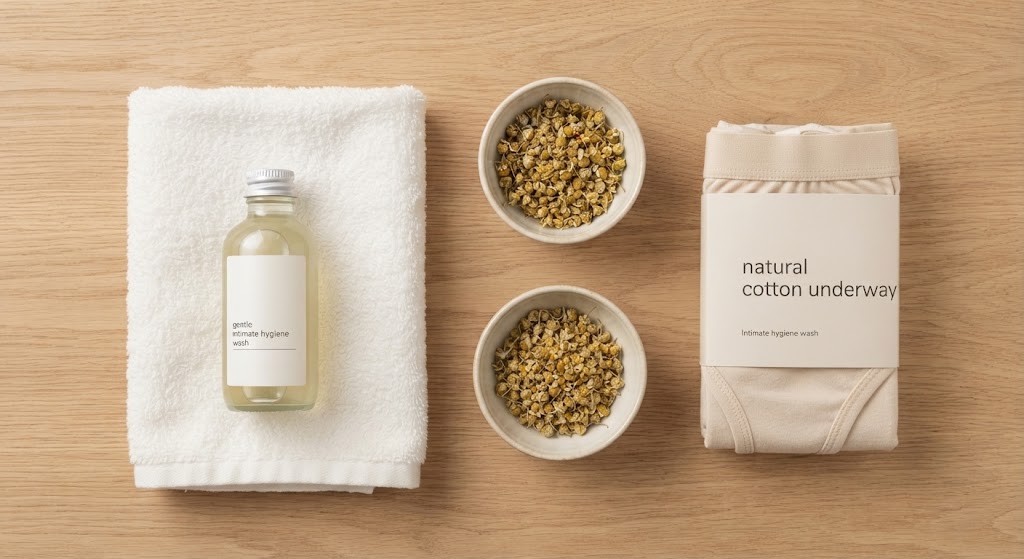
- What helps: Starch baths to soothe itching; cool compresses (heat and moisture are a fungal paradise); airing out (sleeping without underwear or in loose cotton shorts); and targeted gynecological probiotics.
- What NOT to do: Do not douche with antiseptic products; do not insert garlic or baking soda (they destroy good bacteria and irritate mucous membranes); avoid scented pantyliners that disrupt natural pH.
Part Two: Vaginal Dryness — Beyond Menopause
This is a topic that for years was “assigned” exclusively to women over 50. The truth is that dryness, burning, and discomfort also affect younger women — due to stress, hormonal contraception, postpartum recovery, or even constant irritation from rough, synthetic underwear rubbing against sensitive areas.
How to Handle It Daily?
- Vaginal Moisturizers: Hyaluronic acid-based gels or suppositories used regularly (2–3 times a week) to maintain internal mucosal hydration.
- Lubricants: Used temporarily during intimacy. Choose water-based formulas without glycerin (glycerin is a sugar that feeds yeast).
- Choosing Comfort Over Pressure: Avoid thongs or rigid, abrasive fabrics during flare-ups. Switch to smooth,comfortable briefs or seamless cuts that eliminate friction.
Part Three: Vaginal Microbiome and the Protective Shield
A healthy woman’s vagina has an acidic pH (approx. 3.8–4.5). This acidity is maintained by Lactobacillus bacteria,which produce lactic acid to create a natural barrier against pathogens.
- What destroys the microbiome? Aggressive alkaline soaps, douching, antibiotics, stress, and a daily diet of non-breathable synthetic underwear.
- How to support the flora? Take targeted gynecological probiotics after antibiotic therapy, ditch perfumed intimate washes, and ensure your daily underwear rotation consists of clean, dry, breathable, and certified skin-friendly materials.
FAQ — Frequently Asked Questions About Intimate Health, Hygiene, and Lingerie
How can I quickly tell a yeast infection from a bacterial one?
Yeast brings itching, burning, and thick white discharge. Bacterial infections feature a fishy odor and a thinner, grayish discharge. A microbiological swab is the only foolproof way to confirm.
Can the wrong underwear actually cause recurring infections?
Yes, absolutely. Synthetic, non-breathable fabrics trap sweat and heat, preventing the skin from breathing. This creates a breeding ground for fungi and bacteria.
Are thongs safe for daily wear?
Thongs can be worn occasionally, but wearing them daily (especially synthetic ones) increases the risk of transferring bacteria from the back to the front and causes continuous friction on delicate skin. For everyday health, classic briefs or seamless styles are much safer.
Does vaginal dryness only affect women in menopause?
No. It also affects younger women due to stress, hormonal birth control, fatigue, or mechanical irritation from poorly chosen underwear.
What is the difference between a moisturizer and a lubricant?
A moisturizer is used regularly for long-term mucosal hydration. A lubricant is used temporarily during intercourse to reduce friction.
Are daily pantyliners harmful?
Not inherently, as long as they are unperfumed, cotton-based, and changed frequently. Scented liners strongly irritate mucous membranes and disrupt pH.
When should I see a gynecologist immediately?
If infections return more than 4 times a year, are accompanied by severe lower abdominal pain or fever, or if changing your hygiene habits and breathable underwear brings no relief within a few day.