





All voices matter
All voices matter


Anti-Chafing Thigh Bands: How They Work and How to Choose the Right Pair
Share your love
Anti-chafing thigh bands are one of the simplest ways to stop thinking about burning thighs in the summer. Summer, a lightweight dress, a walk through the city, and after an hour, that all-too-familiar feeling: your skin starts to burn. Many of us know this far too well. Thigh chafing has nothing to do with body shape—it happens to women of all sizes. All it takes is warmth, sweat, a longer walk, and soft skin rubbing against soft skin. One of the simplest ways to prevent this is an anti-chafing thigh band. Below, I explain how they work, how to choose them, and how to wear them so they don’t slip or roll down.
What Actually Is an Anti-Chafing Thigh Band? It is an elastic knit band that you wear on the upper part of your thigh,right where your legs rub together the most. It looks a bit like the top band of a stay-up stocking, but it is a standalone accessory and does not require any tights or stockings. The mechanism is simple. The band creates a smooth layer between the skin of one leg and the other. Instead of skin rubbing against skin, you get fabric sliding against fabric. That is why there is no redness, burning, or that unpleasant roughness after a day on the move.
Where Does Chafing Come From and Why Powders or Creams Aren’t Always Enough Chafing is caused by a combination of three things: friction, moisture, and heat. Sweat softens the epidermis and makes it easier to irritate. That is why the problem intensifies in the summer, on vacation, and during long walks. Typical home remedies, such as powders, talc, anti-chafing sticks, or protective ointments, work but have limitations. Powder absorbs moisture, but after a few hours, it clumps up and disappears. A stick or cream needs to be reapplied, and some can stain light-colored clothing.A thigh band requires no touch-ups during the day, making it much more convenient for many women. This doesn’t mean other methods are bad. You can combine them—for example, using a cream under the band on very hot days, only if the manufacturer allows it (see below).
How Does the Band Stay on Your Leg? It all depends on the silicone strips on the inside. The silicone grips the skin and prevents slipping. The better the strips are distributed (along the top and bottom edges), the more stably the band stays in place while walking. Two things determine whether the silicone will work:
- Your skin must be dry and clean. Body lotion, oil, and cream weaken the grip. If you like to moisturize your legs,do it in the evening or wait until the skin absorbs the product completely.
- The size must fit your thigh. This is the most common reason for disappointment. A band that is too loose will slide down, and one that is too tight will roll up into a tube and dig in.
How to Choose the Size (It’s More Important Than You Think) All you need is a soft measuring tape. Measure the circumference of your thigh at its widest point while standing relaxed, without tensing your muscles. Then, compare the result with the specific manufacturer’s size chart, because sizing varies between brands, and it’s not worth guessing based on letters alone. A few practical tips:
- If the band leaves deep indentations or you feel tingling or numbness, it is too tight. Take it off and choose a larger size.
- If it slides down after a few steps, it is too loose or you have cream on your skin.
- For fuller thighs, look for plus-size models or bands with a wider panel. A well-fitted wider band distributes pressure more evenly and digs in less.
Smooth or Lace? How to Choose the Finish
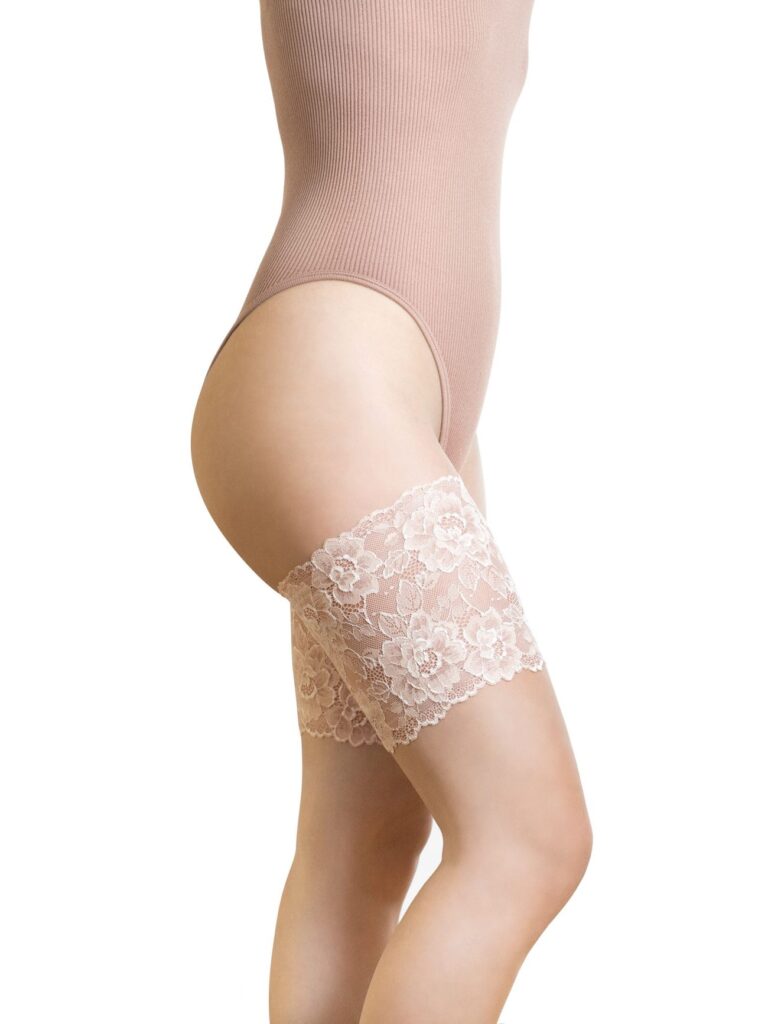
- Smooth knit is discreet and looks great under fitted dresses or skirts because it doesn’t create a visible pattern. It is most commonly chosen in black or a skin-toned shade (nude), which works best under light and thin fabrics.However, no band is completely invisible under every fabric, so always try it on with the outfit you intend to wear.
- Lace is decorative. It works well when the band is meant to be part of the styling, e.g., under a slit skirt or as part of sensual lingerie. However, it may show a pattern under tight material. If you are planning a very intense day, such as all-day sightseeing in the heat, consider anti-chafing shorts. A longer leg covers a larger surface of the thigh,providing broader protection, and the fabric shifts less.
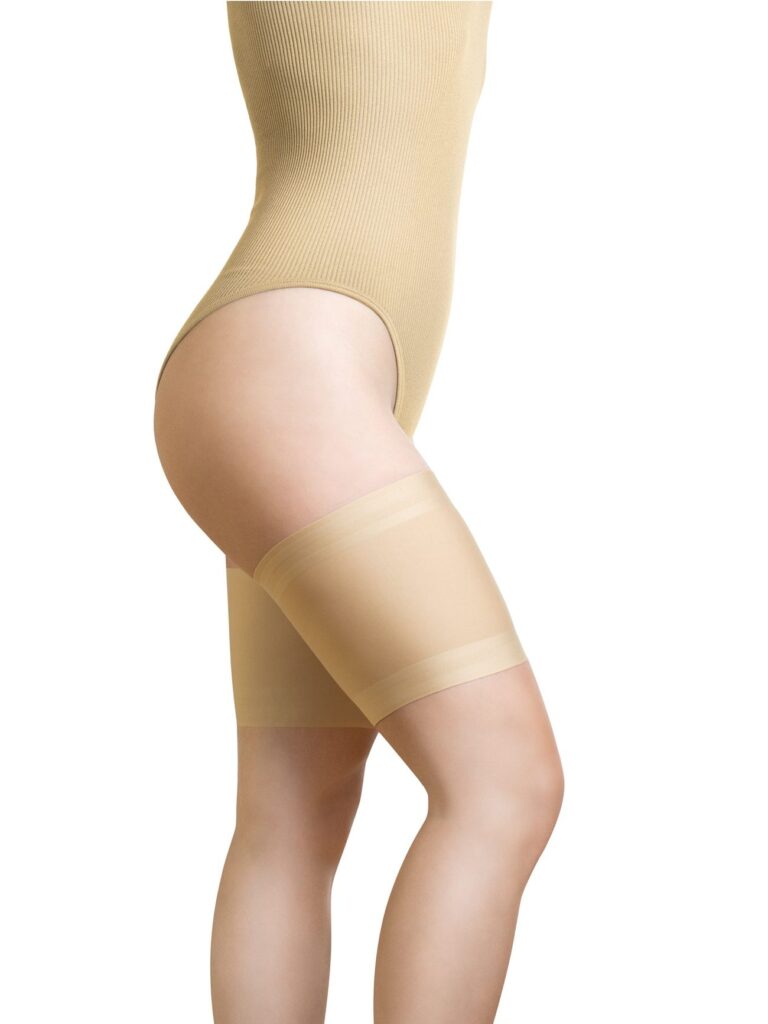
How to Put It On Step by Step
- Dry your skin and wipe away any excess lotion.
- Pull the band up from your foot, stretching it gently so you don’t snag it with your fingernails.
- Position it at the height where your thighs rub the most, usually the upper part of the thigh.
- Smooth out the edges and make sure the silicone adheres evenly without folds.
- Take a few steps to check if it moves. If it does, readjust the placement or change the size.
Common Mistakes
- Putting them on freshly moisturized skin (the silicone will slip).
- Buying “by eye” – choosing a size based on a letter instead of measurements.
- Buying a band that is “too small to hold better” (the effect is the opposite, as it rolls up and digs in).
- Wearing them on irritated or broken skin (the skin must heal first).
- Skipping washes (sweat and cosmetics build up on the silicone and weaken its grip).
Care to Make Your Bands Last Longer
- Hand wash in lukewarm water with a mild detergent.
- Do not use fabric softener, as it coats the silicone and ruins its grip.
- Dry flat, away from radiators and direct sunlight.
- Before putting them on, you can wipe the silicone with a damp cloth and dry it thoroughly.
When a Thigh Band Isn’t Enough If the chafing is painful, the skin is red, weeping, or a rash appears that doesn’t go away after a few days, consult a doctor or pharmacist. Similar symptoms may require medical treatment, such as for a fungal or bacterial infection. The band prevents friction, but it does not heal irritation.
FAQ: Frequently Asked Questions About Anti-Chafing Bands
Will the band be visible under a dress?
It depends on the fabric and cut. Smooth, skin-toned knitwear is the least visible under fitted materials, while lace may show through. It’s best to try it on with the outfit you plan to wear.
Why is my band slipping down?
Usually because of the wrong (too large) size or cream/lotion on the skin. Dry your skin, check your thigh circumference,and compare it with the manufacturer’s chart. If the problem persists, choose a smaller size or a model with a wider silicone band.
How do I choose the right size band?
Measure the circumference of your thigh at its widest point and compare the result with the specific model’s size chart.Sizing differs across brands. If the band leaves deep marks or your leg feels numb, choose a larger size.
Can I wear the band all day?
Many women wear them all day long, but it’s worth monitoring your skin. Choose a breathable material and take the band off if you feel pressure, itching, or notice redness. Wash it regularly so that sweat doesn’t weaken the silicone.
How are bands different from anti-chafing shorts?
A band covers a narrow strip of the thigh, is lighter, and takes up very little space. Shorts have a longer leg, offering protection over a larger area, and are more stable during long walks, but they add extra layers of fabric in hot weather.
Can I put a band over irritated skin?
It’s better to wait until the skin heals. A band placed over a wound or severe redness can cause further irritation. If the irritation doesn’t go away after a few days or worsens, consult a doctor.
Material sources:
Product photography: Fiore.pl Main graphic: noq.com.pl