 Lingerieinfo
 Lingerieinfo.com
Statement of Intent and the Role of Industry Media
For decades, the lingerie industry has been built on emotion, aesthetics, and the art of presenting the human body—and there is nothing about this that requires apology or hesitation. As a trade portal that has closely monitored the lingerie market for years, we observe the ongoing evolution of visual marketing and brand communication every day. We recognize the tremendous dedication that models, photographers, stylists, and creative teams invest in crafting every campaign—the hours of preparation, the precise control of lighting, framing, and movement designed to convey not only bodily elegance, but above all, the true character and quality of the product.
It is precisely out of this respect that we feel a responsibility to take a clear stand in favor of industry-wide professionalism. We hold the work of models and creators in high regard, deeply appreciating the craftsmanship behind their trade. It is from this foundation of respect that we see the need for an honest, objective conversation about the trajectory of visual communication in the world of lingerie today. The accelerating dynamics of social media present our industry with fresh challenges that can no longer be overlooked.

Market Pressure vs. The Definition of Beauty
In an era dominated by algorithms, the line between subtle product presentation and gratuitous spectacle has become increasingly fine. Models frequently find themselves under immense pressure to navigate conflicting expectations—balancing a market demand for absolute authenticity and naturalism on one side, against the lingering presence of heavily idealized imagery on the other.
The core issue arises when this fast-paced competition for instant consumer attention pushes the product itself—the corsetry craftsmanship, bra construction, lace quality, and seam finishing—into the background. Instead of asking, „How well does this garment perform its function, and how comfortable is it to wear?”, the prevailing question becomes, „Will this image capture enough attention during a fraction of a second of scrolling?” This shift in priorities, if left unexamined, risks distorting the fundamental purpose of product communication within our sector.
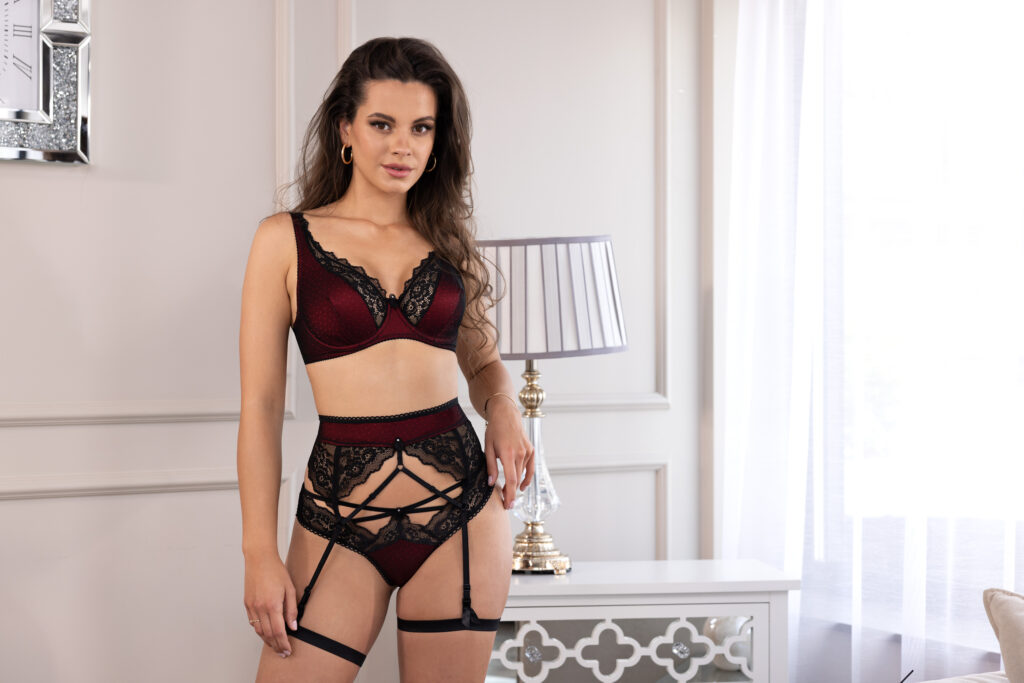
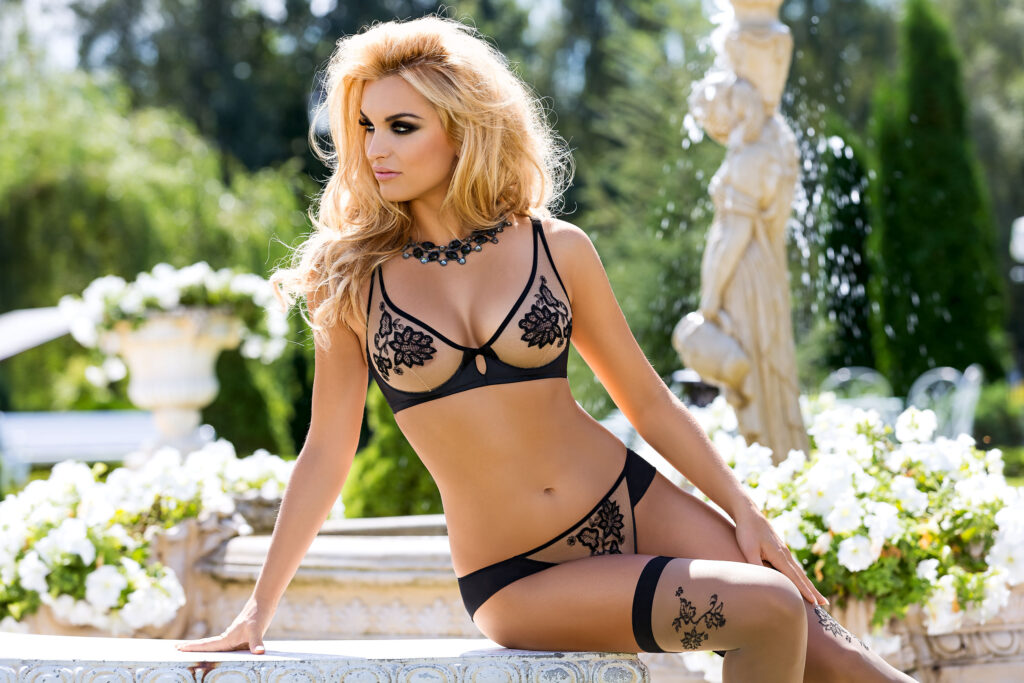
A clear example of these shifting expectations is the increasing presence of models with visible tattoos in lingerie campaigns. On one hand, this reflects a broader cultural movement toward authenticity and body diversity—brands naturally wish to portray women as they truly are, celebrating individual features that depart from the rigid, uniform standards of past decades. On the other hand, voices within the trade point out that prominent tattoos can draw the viewer’s focus away from the product itself. The eye is naturally drawn to the artwork on the skin rather than the intricate cut of the lace or the architecture of the cup—a particular challenge in catalogue and B2B photography where clear presentation of detail is paramount.
This is not a debate over whether tattooed models belong in the industry—such a stance would be both unfair and disconnected from the realities of modern fashion. Rather, it is a question of conscious art direction. Accomplished photographers and creative directors possess the skill to compose lighting, posing, and framing so that body art harmonizes with the aesthetic of a shoot rather than competing with the product. The responsibility therefore rests not with the model or her personal appearance, but with the professional execution of the creative team—further proof that campaign quality is driven by preparation and expertise rather than coincidence.
Professional Presentation vs. Public Reception
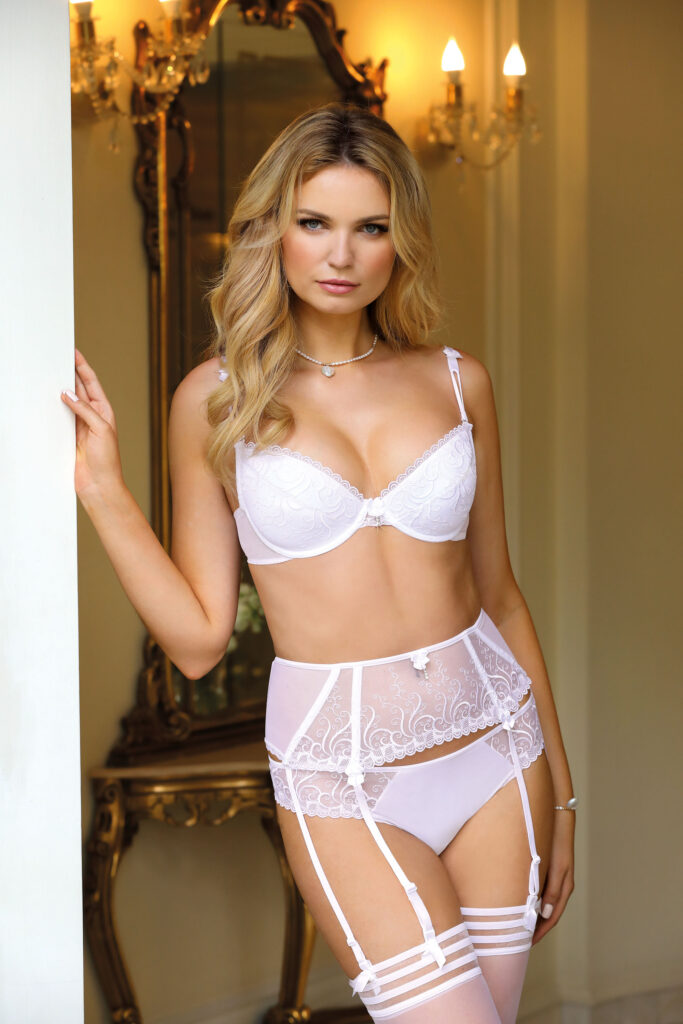
Exceptional lingerie photography is an applied art form of the highest order. It demands remarkable poise, body awareness, and technical understanding from a model to effectively showcase both the aesthetic and functional qualities of a garment. It is work that requires a level of professionalism equal to any other branch of fashion photography—and often even greater precision, as any flaw in fit or presentation is immediately apparent.
Difficulties arise when the focus shifts from highlighting product excellence to relying on cheap provocation. When this occurs, the entire industry ecosystem suffers:
- Brands – because their garments cease to be evaluated on technical construction, comfort, or material innovation, becoming viewed instead through the lens of short-lived sensation.
- Models – because their skilled craft and professional versatility are reduced to mere objectification rather than a true partnership in building brand identity.
- Consumers – who receive skewed visual information that diverges from the everyday experience of wearing lingerie, making informed purchasing decisions far more difficult.
The Collective Interest of the Industry
Our goal is not to pass judgment on the aesthetic choices of individual brands or creators, but to encourage constructive reflection on where visual communication in our industry is headed. Lingerie modeling deserves the utmost respect and rigorous professional standards—from the brands commissioning campaigns to the media outlets covering them.
We call upon manufacturers, modeling agencies, and visual creators to collaborate in fostering standards where the model serves as an ambassador of style and quality, and product photography remains an applied art of the highest caliber—dedicated above all to the authentic presentation of what matters most: the lingerie itself, its engineering, comfort, and craftsmanship.
The Editorial Board at Lingerieinfo.com welcomes perspectives from models, photographers, stylists, and brand representatives. We invite you to reach out and share your experiences from working on lingerie campaigns.